
Non-Destructive Testing (NDT) of RC Structures
Non-Destructive Testing (NDT) is a vital method to assess the quality, uniformity, and strength of in-situ concrete
without causing any damage to the structure. NDT is highly effective for newly constructed elements as well as for
evaluating aging or existing structures. It allows engineers to detect potential defects, confirm construction
quality, and make informed decisions about maintenance, repairs, or upgrades.
At Civiltech Quality Control Lab Private limited, we provide advanced NDT services to ensure that your concrete structures meet required performance
and safety standards.
Common NDT Methods
- Rebound Hammer Test: Measures surface hardness of concrete, providing an estimate of
compressive strength and uniformity.
- Ultra-Pulse Velocity (UPV) Test: Evaluates the quality and homogeneity of concrete by measuring
the velocity of ultrasonic pulses through the material.
Importance of NDT
- Identifies potential defects like voids, cracks, and honeycombing in concrete structures.
- Assesses uniformity and quality without damaging structural members.
- Supports structural safety evaluations and maintenance planning.
- Ensures compliance with Indian Standards (IS codes) and engineering specifications.
- Reduces long-term costs by enabling timely intervention and repairs.
Gallery
Include images of our team performing NDT on RC structures using Rebound Hammer and UPV equipment, showcasing both
field and laboratory testing.
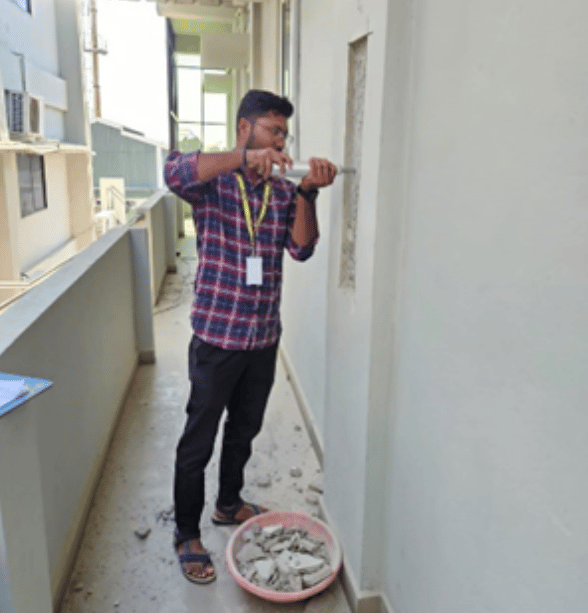
Non-Destructive Testing
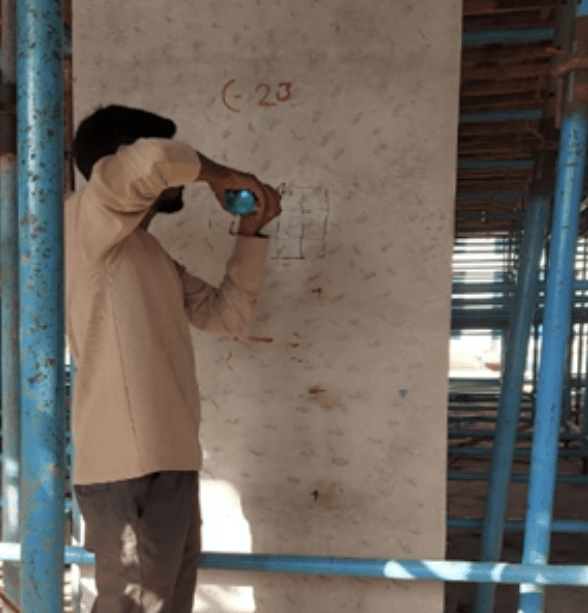
Non-Destructive Testing

Non-Destructive Testing
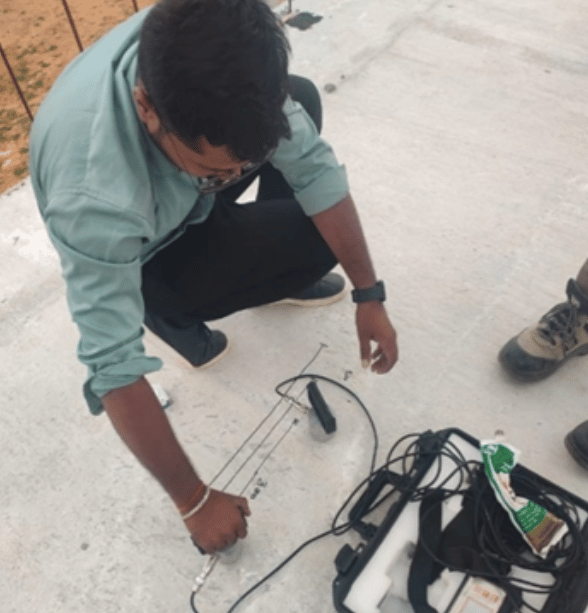
Non-Destructive Testing

